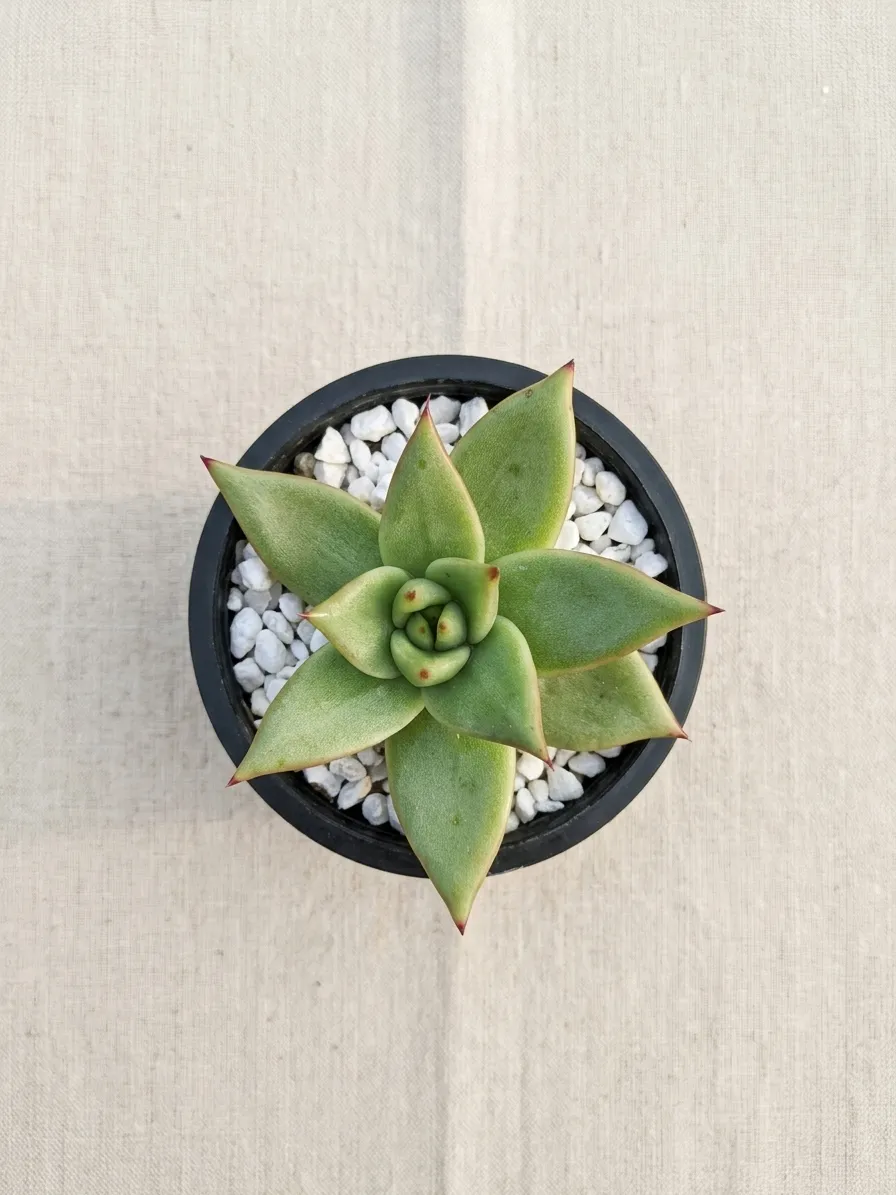
Echeveria Agavoides (Lipstick Echeveria)
Known locally as molded wax or lipstick succulent in Islamabad, this unique variety features fleshy, sharp triangular leaves forming a distinct star-shaped rosette. Unlike most Echeveria, its smooth green leaves and prominent red tips give it a clean, structured appearance similar to an agave. Perfect for bright window sills, office desks, and modern interiors.
Sunlight
Bright Indirect Light (Best) or partial direct sun (Morning sun).
Watering
Very Low (Wait for soil to dry out completely before watering again).
Plant Type
Stemless Rosette Succulent
Pot Size
Approx 3-5 Inches
Hand-Delivered Safely
Specially packaged for transit, anywhere in Pakistan. If it arrives unhealthy, we replace it.
An Echeveria that looks like an agave
Echeveria agavoides — Lipstick Echeveria, or molded wax in some Islamabad nurseries — breaks the usual Echeveria pattern. Instead of soft, powdery, spoon-shaped leaves, it grows stiff, smooth, triangular ones with a sharp point, arranged in a tight star. The leaves are clean apple-green, and the edges and tips carry a red line, which is where the lipstick name comes from.
That red is controlled by light. In bright conditions it deepens and spreads along the margins; in dim ones it fades to a thin line or disappears. It is stemless, stays low, and forms offsets slowly.
Light
Bright indirect light at minimum, with direct morning sun if you can give it. It wants more light than most indoor plants. On a dim desk it stretches — the rosette opens, the leaves flatten out and lose their colour — and it does not tighten back up. Full afternoon sun through glass in June is the other limit and scorches the leaf faces brown; pull it back a foot once afternoons pass 38°C. The summer care guide covers the same adjustment across the collection.
Water
Only once the soil is dry all the way through — usually every two to three weeks. Water the soil around the rosette, not into its centre: water sitting in the crown in a humid monsoon week is the most common way an Echeveria rots. From July to August, check the soil with a finger rather than the calendar. Leaves going translucent and soft from the bottom up means stop watering and read how to save a dying succulent.
The lowest leaves shrivelling and drying one at a time is normal — that is the plant retiring old leaves, not a problem.
Soil and potting
A gritty, fast-draining mix in a pot with a drainage hole; the soil mix guide has the ratio. Check the base of the leaves now and then for mealybugs, which show up as small white cottony spots.
Winter
From November it slows down and needs very little water. Keep it off cold glass at night and away from direct heater air.
Good to know
Echeverias are non-toxic to cats and dogs. The leaf points are firm enough to notice when handling but are not spines.
Care Guides for Echeveria Agavoides (Lipstick Echeveria)
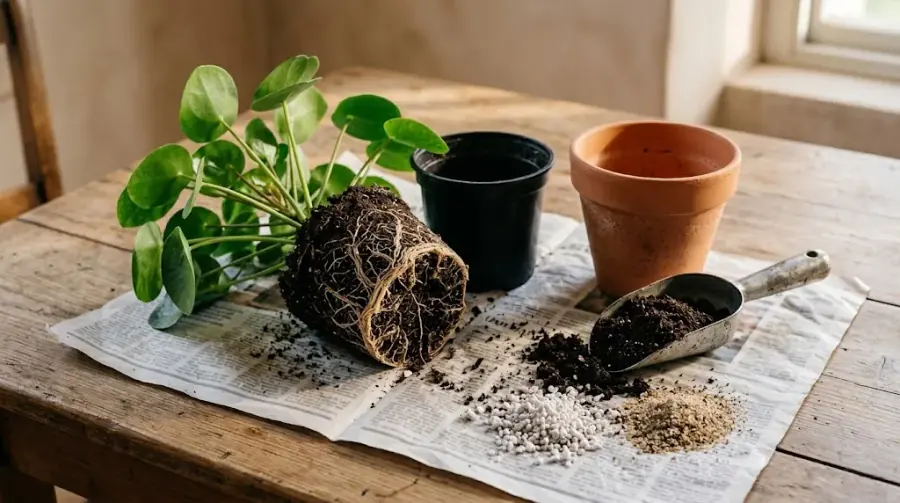
How to Repot an Indoor Plant — A Pakistani Guide
Repotting at the wrong time kills more plants than it saves. Learn when to repot, what soil to use, and the exact steps — adapted for Pakistani conditions.
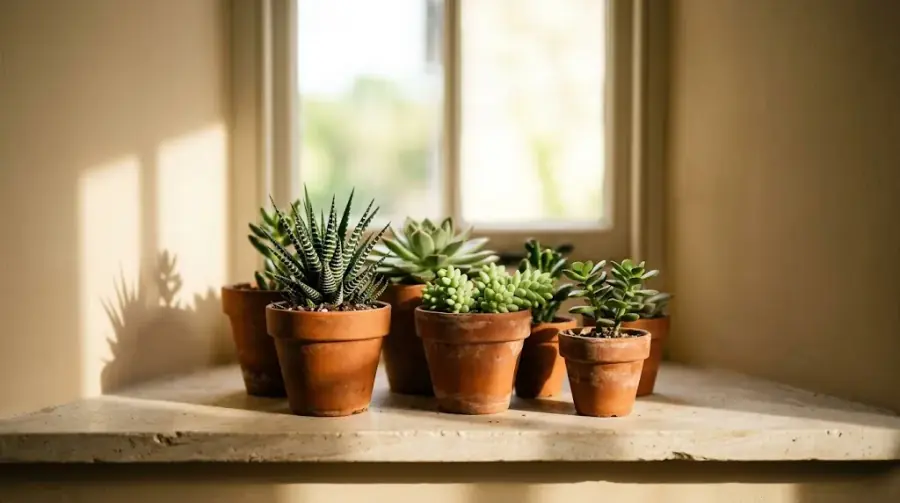
Summer Plant Care in Pakistan — Surviving 45°C
Islamabad and Rawalpindi summers cross 45°C, then turn humid overnight in monsoon. Here is how to keep your indoor plants alive through both.
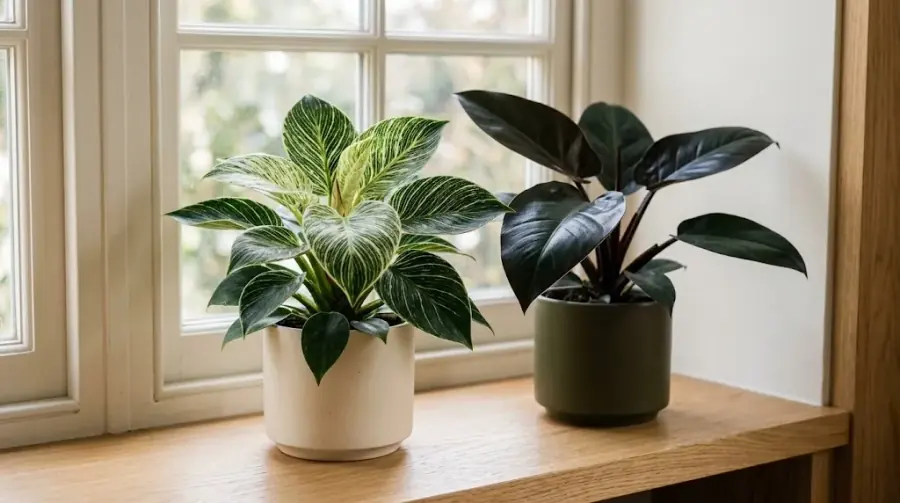
Philodendron Care in Pakistan — Birkin, Black Cardinal & Beyond
Philodendrons are the easiest way into rare foliage collecting. Here is how to keep Birkin, Black Cardinal and other varieties thriving in Pakistani homes.