First — Don't Panic
Every plant parent in Islamabad and Rawalpindi has been there. You glance at your succulent and something looks very wrong — leaves are yellowing, the stem feels soft, or the whole plant looks like it's slowly collapsing. The good news? Most succulents can be rescued if you act quickly and correctly.
Here's how to diagnose exactly what's wrong and fix it.
Step 1: Diagnose the Problem
Before you do anything, identify the symptom. Each one points to a different cause.
Symptom: Yellow or Translucent Mushy Leaves
Cause: Overwatering or Root Rot — This is the #1 killer of succulents in Pakistan, especially during the July–August monsoon season when the air itself is saturated with humidity.
Symptom: Shriveled, Wrinkled Leaves
Cause: Underwatering — The plant is severely thirsty and has started consuming its own leaf moisture reserves.
Symptom: Brown, Crispy Leaf Tips or Patches
Cause: Sunburn or Low Humidity — Common in Islamabad from May to July when afternoon sun temperatures exceed 38°C. Direct sun through a glass window magnifies heat and burns leaves permanently.
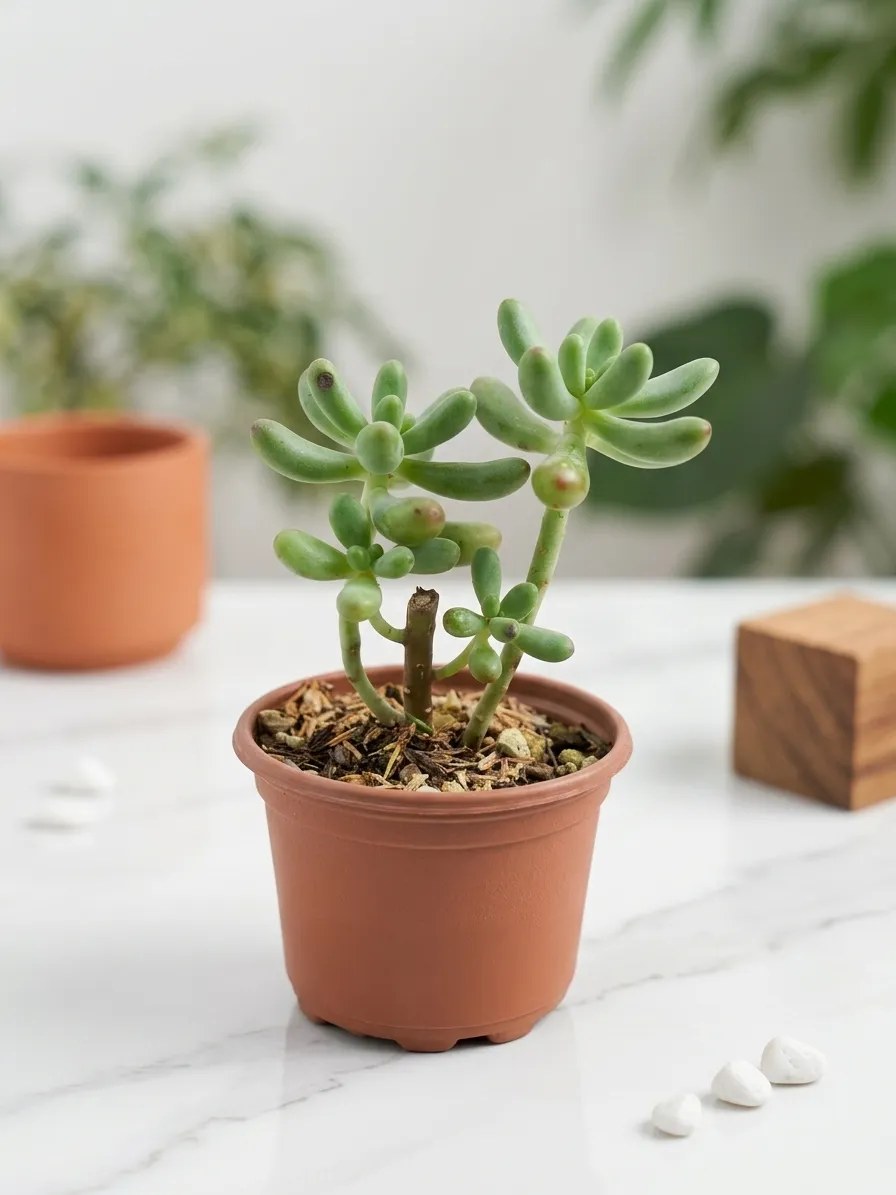
Symptom: Tall, Stretching Stem with Wide Gaps Between Leaves
Cause: Etiolation (Not Enough Light) — The plant is literally stretching itself trying to reach more light. Common in north-facing rooms or apartments in basement floors.
Symptom: Black or Dark Brown Stem at the Base
Cause: Severe Root Rot — This is an emergency. The rot has moved from the roots up into the stem itself.
Step 2: The Rescue Plan
For Overwatering — Act Immediately
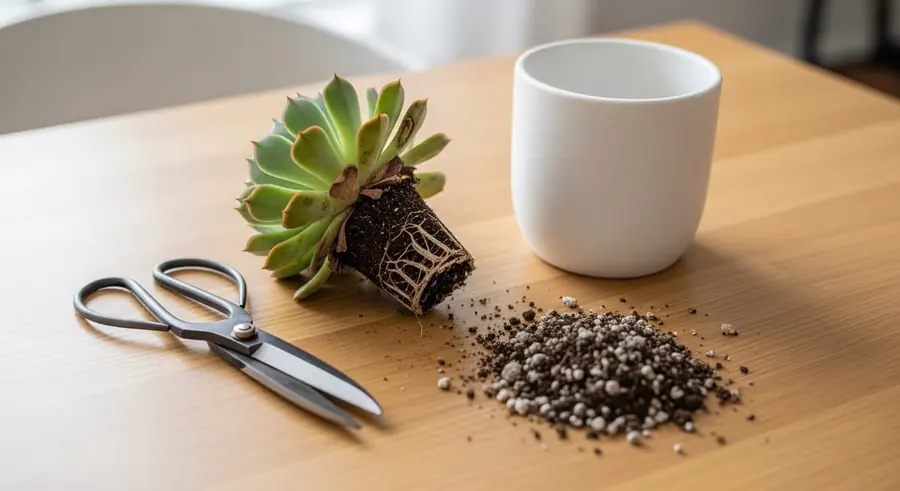
Unpot the plant right now. Gently remove it from its pot and shake off all the soil.
Inspect the roots. Healthy roots are white or light tan. Rotten roots are black, brown, and smell unpleasant.
Cut the rot. Use sterilized scissors to snip off every black or mushy root. Cut until you see clean, white root tissue.
Let it dry. Place the bare plant on a dry paper towel in a shaded spot for 2–3 days. Do not water. The roots need to callous over.
Repot in fresh, dry soil. Use a well-draining mix — ideally 40% pumice or perlite, 40% leaf mold, and 20% sand. Do not water for the first week after repotting.
For Underwatering — The Deep Soak
Give it a deep soak immediately. Pour water slowly until it runs freely from the drainage holes.
Wait 30 minutes, then pour again. The dry soil may have become hydrophobic and need two rounds to fully absorb.
Place in bright indirect light. Within 3–5 days, the leaves should plump back up.
For Sunburn — Relocate and Wait
Move the plant immediately to a spot with bright but indirect light — an East-facing windowsill is ideal in Islamabad and Rawalpindi.
Accept the damaged leaves. Brown sunburn patches are permanent and will not recover. However, new healthy growth will emerge from the center of the plant.
Do not cut the damaged leaves until the new growth is well established — they still provide some nutrients to the plant.
For Etiolation — Behead and Restart
Use a sterilized knife to cut the healthy rosette head off the stretched stem.
Let the cutting dry for 3–5 days until the cut end is hard and calloused.
Plant it in fresh soil and place it in your brightest window. The original stretched stem will often sprout new baby plants called offsets.
Step 3: Prevention Going Forward
Always use pots with drainage holes. Decorative pots without holes are the single biggest cause of root rot in Pakistani homes.
Water less during monsoon. In July and August, Islamabad's humidity means your soil stays wet far longer than usual. Extend your watering schedule by an extra week.
Check before you water. Stick a finger or a wooden chopstick 2 inches into the soil. If it comes out with any damp soil clinging to it — wait.
Move plants inside during hailstorms. Islamabad and Rawalpindi get occasional hail in spring. A single hailstorm can permanently scar succulent leaves.
When It's Too Late
If the stem is completely black and mushy all the way to the top, the plant is unfortunately beyond saving. But before you give up entirely — check if any individual leaves are still firm and healthy. Even from a dead plant, a single good leaf can be propagated into a brand new succulent. Check our Propagation Guide to learn how.
Shop the Guide
Everything you need to get started.