What is Succulent Propagation?
Propagation is simply the process of creating new plants from an existing one. Most succulents are incredibly generous—they can grow an entire new root system and "baby" plant from just a leaf or a stem cutting.
It costs nothing but time, and it is the cheapest way to turn one plant into a shelf full. It is also the only way to save a plant that has stretched badly or started to rot at the base — the top can usually be rescued even when the roots cannot.
What You Need
A sharp knife or blade, wiped with surgical spirit before cutting
A shallow tray or pot of dry, well-draining succulent soil
A spray bottle
A bright spot out of direct sun
No rooting hormone, no plastic dome, no heat mat. Succulents do not need any of it, and the humidity a dome traps is actively harmful here.
Method 1: Leaf Propagation (The Easiest Way)
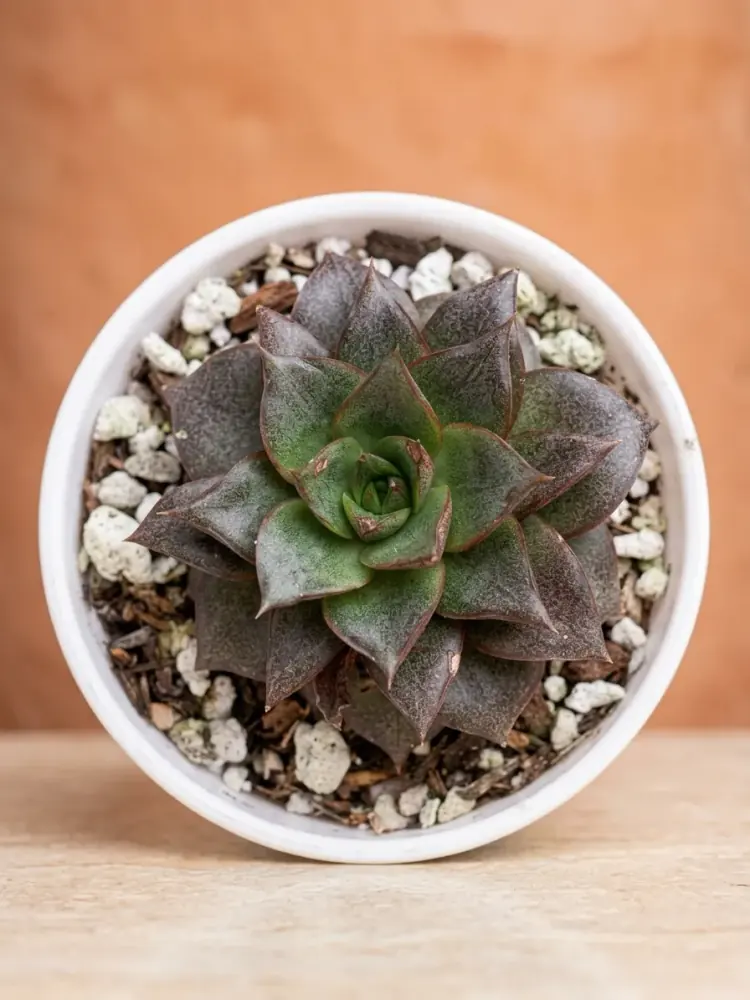
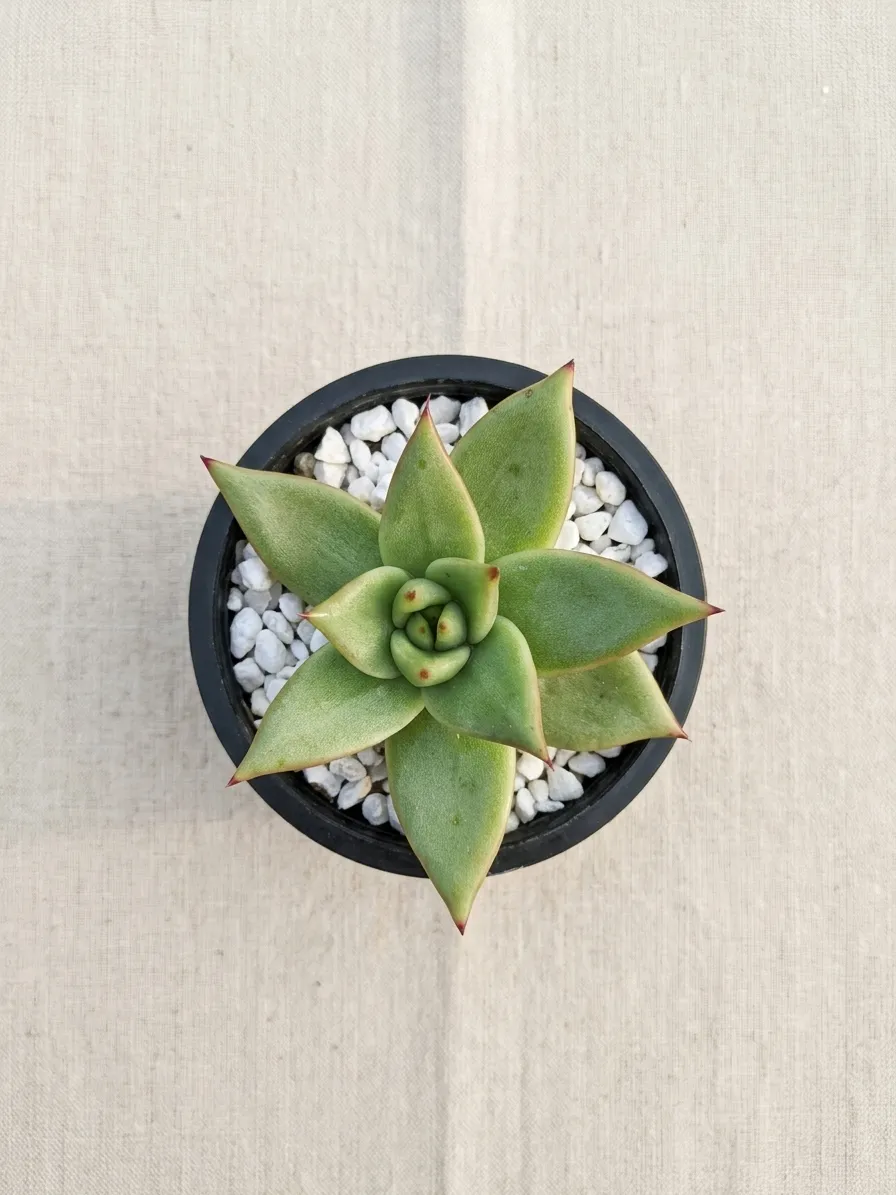
This is perfect for Echeverias and Graptopetalums.
Gently Pull: Twist a healthy leaf off the main stem. It must be a clean pull—no part of the leaf should be left on the stem.
The "Callous" Phase: This is the secret! Lay the leaves on a dry paper towel in a shaded spot for 2–3 days. The "wound" must dry and callous over, or it will rot when you water it.
Place on Soil: Lay the calloused leaves on top of well-draining succulent soil.
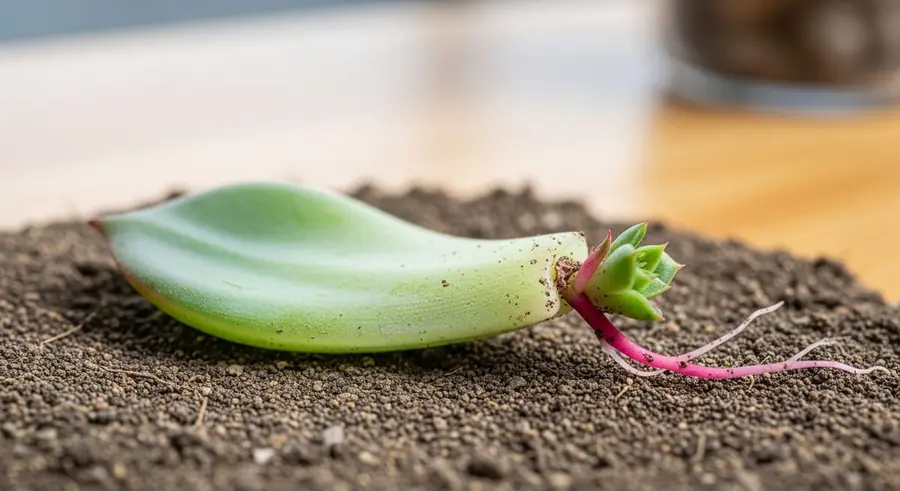
Mist, Don't Soak: Use a spray bottle to mist the soil every few days when it feels dry. In a few weeks, you'll see tiny pink roots and a miniature plant appearing!
Take more leaves than you need. Even in good conditions a fair number simply shrivel and do nothing — that is normal, not a mistake you made. Ten leaves might give you six plants.
Method 2: Stem Cuttings (For "Leggy" Plants)
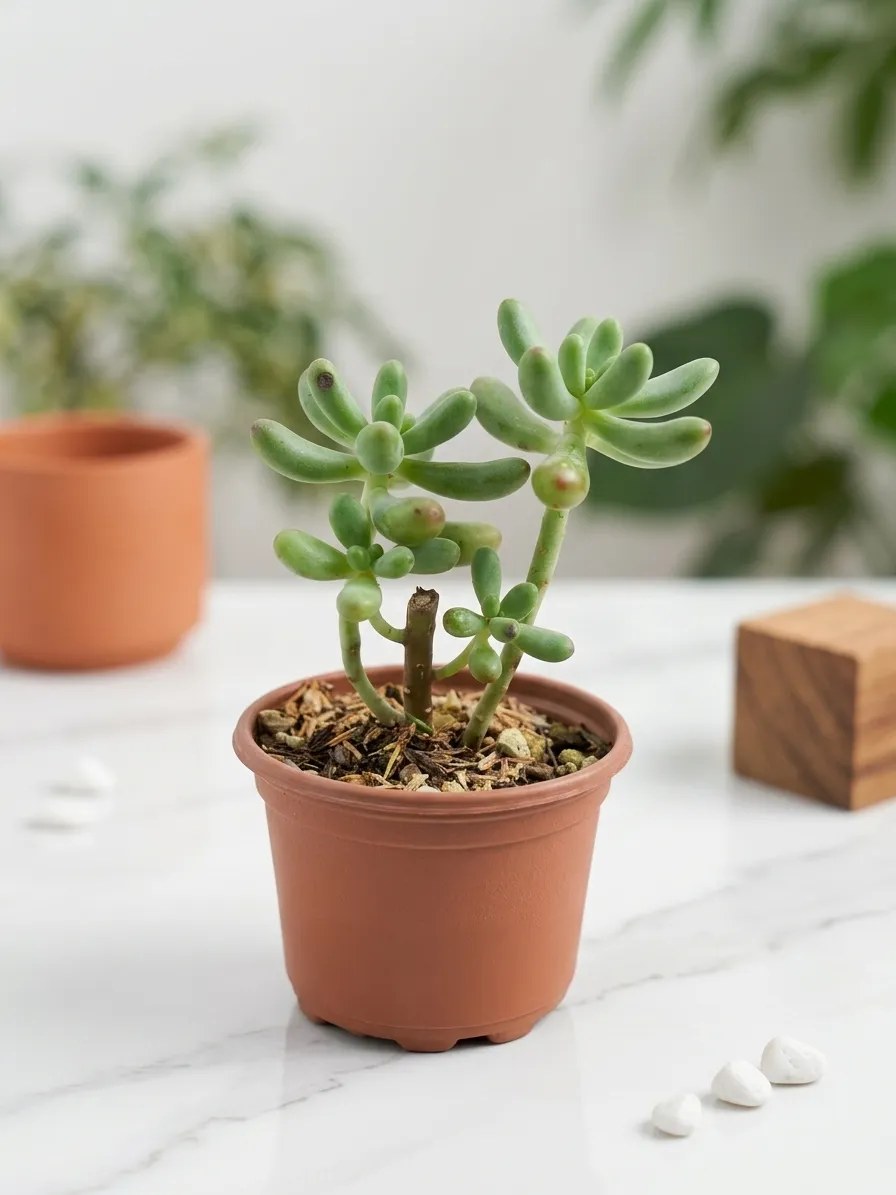
If your plant has grown tall and stretched out, "beheading" it is the best way to reset it.
Cut: Use a sterilized knife to cut the head of the plant off, leaving about an inch of stem.
Dry: Just like the leaves, let the head dry for 3–5 days until the stem end is hard.
Plant: Push the stem into dry soil. Do not water for the first week. The plant will realize it's thirsty and start pushing out new roots to find moisture.
Do not throw away the bottom half. The stump left in the pot will usually sprout several new rosettes around the cut over the following weeks, so one leggy plant becomes a cutting plus a cluster.
Method 3: Dividing Offsets and Pups
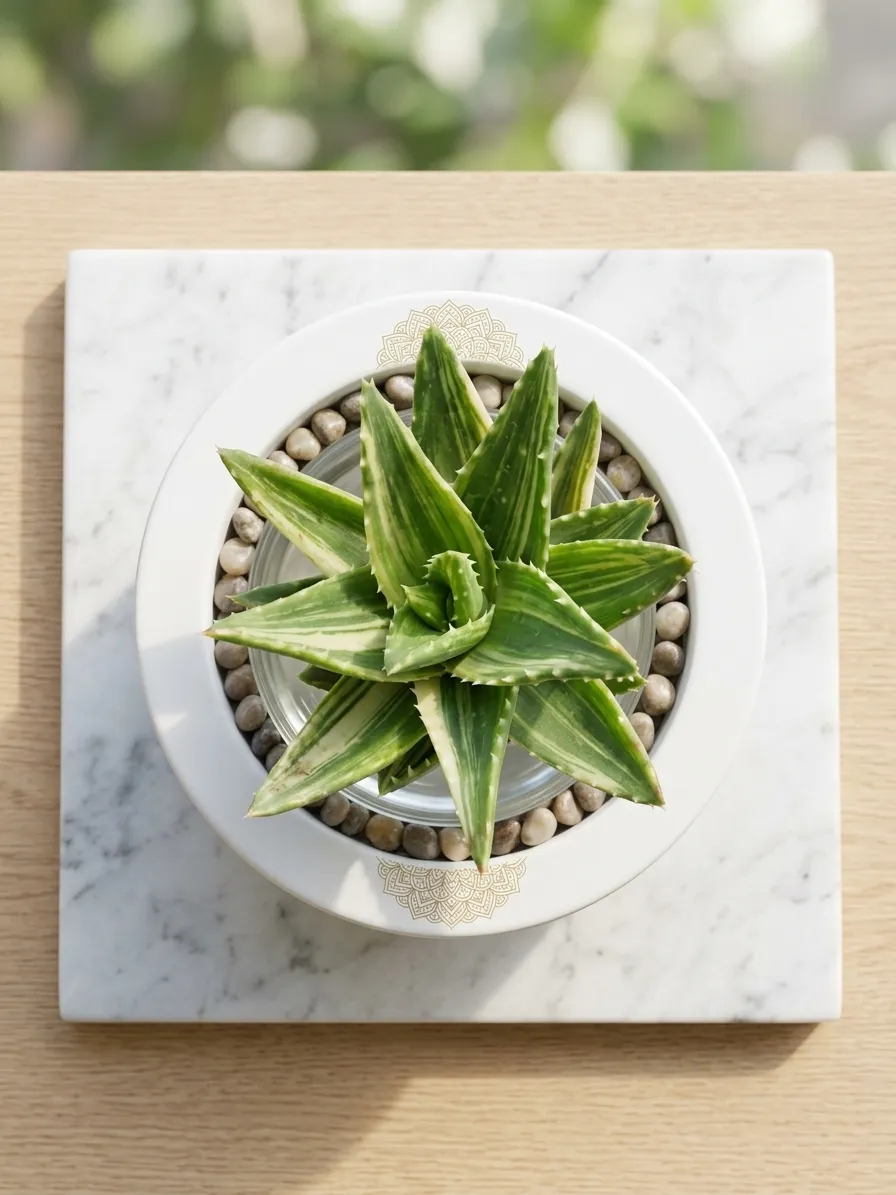
Some succulents do the work for you. Haworthias, Aloes, Sansevierias and many cacti produce offsets — complete miniature plants attached to the parent at the base.
Wait until the pup is a reasonable size, roughly a third of the parent. Removing it too early gives it too little root to survive on.
Tip the whole plant out of its pot and shake the soil off so you can see where the pup attaches.
Separate it by hand if it comes away cleanly, or cut it free with a sterilised blade, keeping as many of its own roots as possible.
Let any cut surface dry for a day or two, then pot it into dry soil and wait a week before the first watering.
This is the fastest method by a wide margin. A divided pup is already a plant, so it establishes in weeks rather than the months a leaf takes.
A Note on Water Propagation
You will see people rooting succulent cuttings in a glass of water. It works, and it looks impressive, but roots grown in water are structurally different from roots grown in soil, and many of them die off when you pot the plant up. For succulents specifically, dry soil is more reliable. Save water propagation for pothos and philodendrons.
Why Propagation Fails
Almost every failure comes down to one of five things:
The leaf was not pulled cleanly. If any part of the leaf base is left on the stem, the growth point came with it and nothing will sprout.
It was not left to callous. A wet wound in soil rots. Two to three days of drying is not optional.
It was watered too much. Mist the soil surface; do not soak the tray. A leaf sitting in wet soil turns to mush.
Too much direct sun. Babies have no root system to draw water with. Bright shade until they are rooted.
Wrong time of year. See below.
How Long It Takes
Be patient. Roots usually appear within two to three weeks, a visible baby rosette within four to six, and a plant big enough to pot on its own in three to six months. The original leaf slowly shrivels as the baby consumes it — do not pull it off while it is still plump, because the baby is still feeding on it.
When is the Best Time to Propagate?
In Pakistan, the best time to start your "plant babies" is March–April or September–October. Avoid the extreme heat of June or the deep dampness of the Monsoon season, as the high humidity can cause the leaves to turn mushy before they grow roots.
If you must propagate in July or August, keep the tray indoors somewhere with real air movement — a ceiling fan on low is enough — and mist far less than you think you need to. Anything that slows drying in the monsoon works against you.
Shop the Guide
Everything you need to get started.