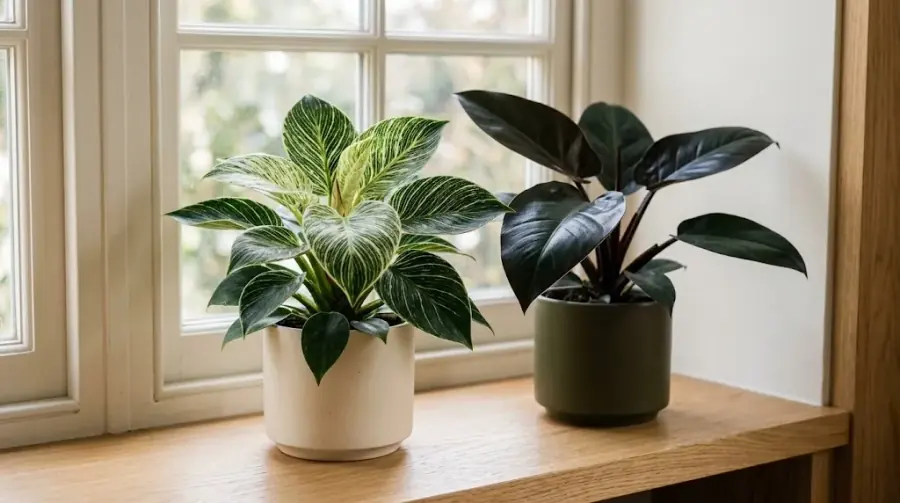
Why Philodendrons Suit Pakistani Homes
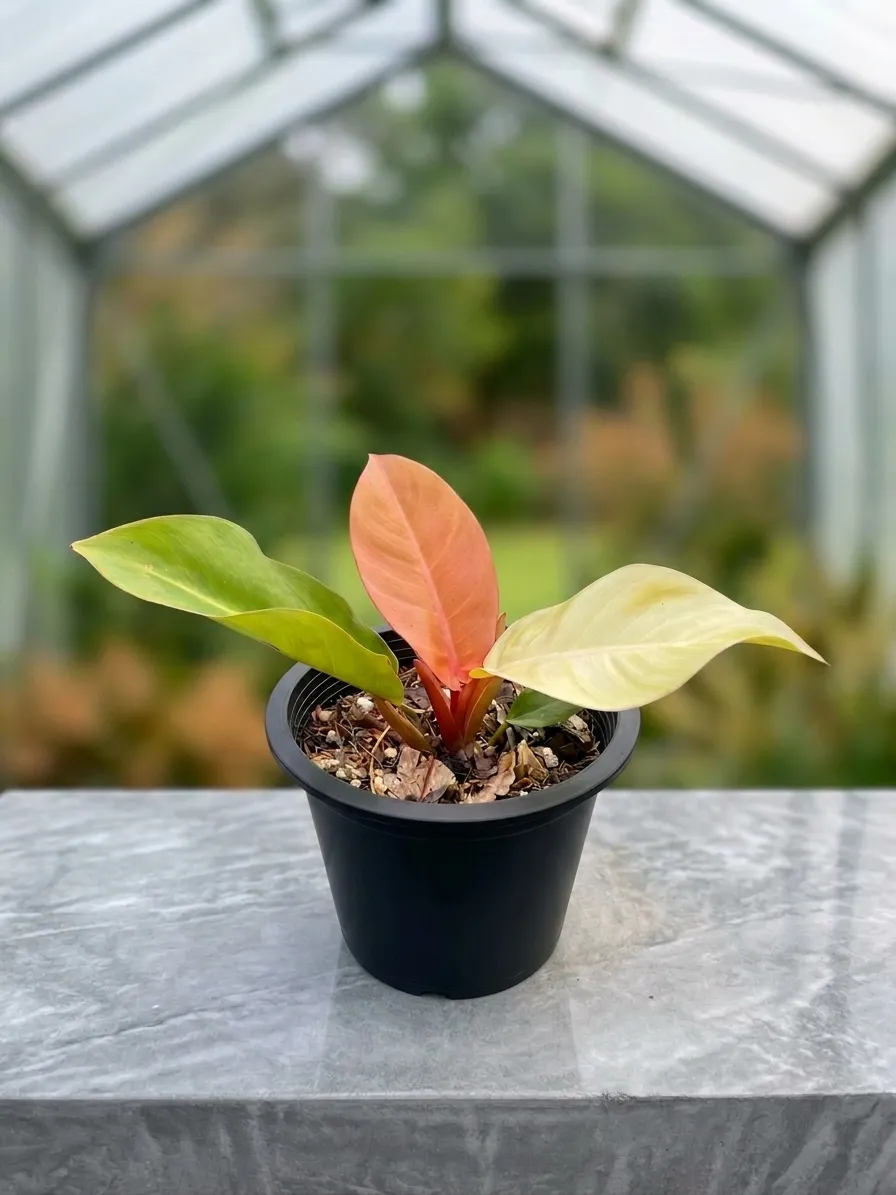
Philodendrons have become the most collected indoor foliage genus in Pakistan, and for good reason. They are tropical understorey plants, which means they evolved beneath a forest canopy in filtered light — conditions that an average Pakistani living room reproduces almost perfectly.
They tolerate the indoor warmth of our summers, ask for very little, and reward you with dramatic foliage. If you have kept a Money Plant alive, you can keep a Philodendron alive.
Light — Bright, but Never Direct
Every Philodendron wants bright indirect light. In practice, for a home in Islamabad or Rawalpindi, that means:
- Ideal: 3-6 feet from an east or north-facing window.
- Workable: a bright room with a sheer curtain diffusing the light.
- Avoid: direct afternoon sun through west-facing glass, which scorches leaves within days.
Variegated varieties like Birkin need more light than plain green ones, because the white pinstripes contain no chlorophyll. Too little light and new leaves emerge mostly green as the plant compensates. Too much and the white sections burn brown. Bright indirect light is genuinely the sweet spot.
Watering — Where Most People Go Wrong
Philodendrons are far more forgiving of being too dry than too wet. The rule is simple: water when the top 1-2 inches of soil feel dry to the touch.
Push your finger in and check every time rather than watering on a fixed schedule. Requirements swing enormously through the year:
- Summer (May-July): roughly every 4-6 days.
- Monsoon (Jul-Sep): every 8-12 days — the air is already holding moisture.
- Winter (Nov-Feb): every 10-14 days. Growth slows, water needs drop sharply.
When you do water, water thoroughly until it runs from the drainage hole, then empty the saucer completely. Never leave the pot standing in water.
Humidity and Our Dry Season
Philodendrons are tropical and appreciate humidity above 50%. Islamabad in May and June can drop to 20%, which shows up as crispy brown leaf tips.
Practical fixes that work in a Pakistani home:
- Pebble tray: a shallow tray of pebbles with water below the pot base. Simple and effective.
- Group your plants. Plants transpire; clustered together they raise local humidity for each other.
- Bathroom placement: if you have a bathroom with a window, a Philodendron will be very happy there.
Misting is popular advice but its effect lasts only minutes. A pebble tray does far more.
Caring for Specific Varieties
Philodendron Birkin
Compact, slow-growing, with creamy-white pinstripes on dark green leaves. Needs the most light of the common varieties to hold its variegation. Keep it evenly moist but never soggy. If new leaves come out fully green, move it closer to the window.
Black Cardinal
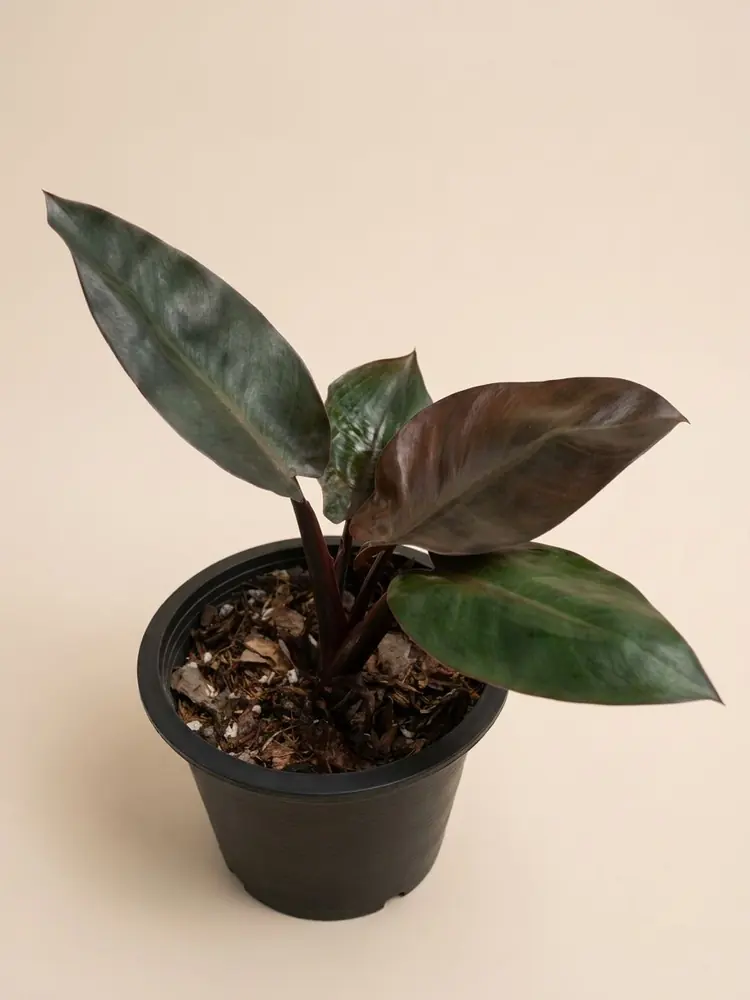
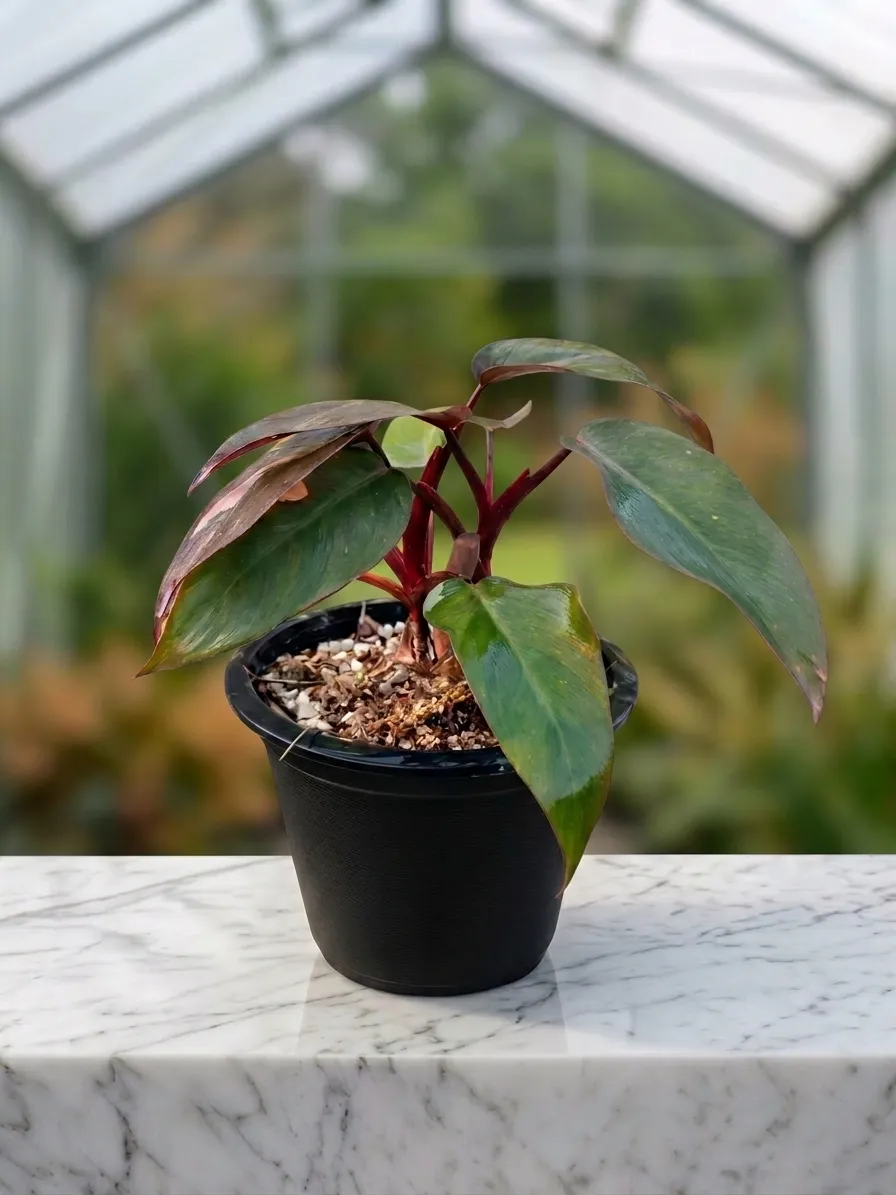
New leaves emerge deep burgundy and mature into a glossy near-black green. It is more tolerant of medium light than Birkin. The dark colour deepens with good light. Wipe the leaves with a damp cloth monthly — dust is very visible on dark foliage and blocks light.
Heartleaf and Trailing Types
The easiest of all. They handle lower light, tolerate missed waterings, and can be trained up a moss pole or left to trail from a shelf.
Soil and Potting
Philodendrons need a chunky, airy mix — not dense garden soil, which suffocates roots and holds too much water. A reliable mix you can make locally:
- 2 parts good quality potting soil
- 1 part coco peat or coco coir
- 1 part perlite or coarse sand
- A handful of small bark chips if you can find them
The pot must have a drainage hole. This is not optional — decorative pots without drainage are the single most common cause of Philodendron death we see.
Common Problems, Quickly Diagnosed
- Yellow leaves (lower, gradual): normal ageing, or overwatering. Check the soil.
- Yellow leaves (many, sudden): overwatering. Stop and let it dry out.
- Brown crispy tips: low humidity or underwatering.
- Brown patches mid-leaf: direct sun scorch. Move it back from the glass.
- Leggy stems, small leaves: not enough light.
- Variegation fading: not enough light for a variegated variety.
Are Philodendrons Pet Safe?
No. Philodendrons contain calcium oxalate crystals and are toxic if chewed by cats and dogs. If you have curious pets, keep them on a high shelf, or browse our pet-safe collection instead.
Need Help With Yours?
Message us a photo on WhatsApp and we will diagnose it. Every plant we deliver comes with lifetime care support.
Shop the Guide
Everything you need to get started.