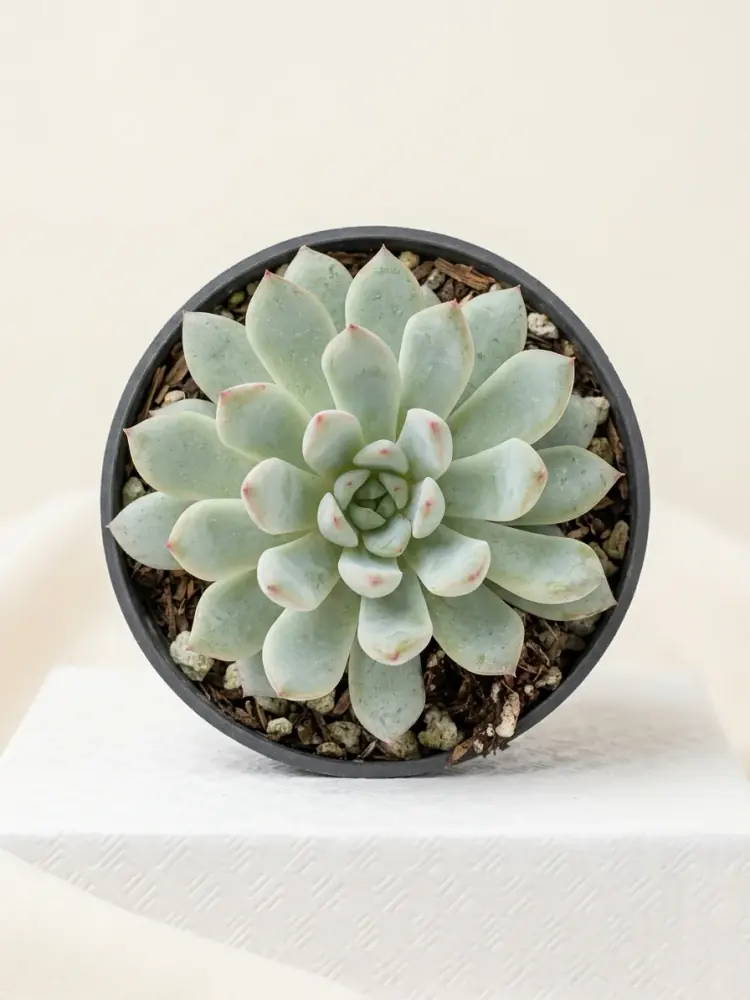
Echeveria
The succulent most people picture when they hear the word — a symmetrical rosette of fleshy pale-green leaves that blush pink at the tips. Local nurseries call it Gulab Succulent, and the resemblance is fair. It wants bright light and very little water, roughly every two to three weeks, which makes it one of the easiest plants in the shop to keep alive on a sunny windowsill or an office desk.
Botanical Name
Echeveria sp.
Pet-Friendly
Yes (Safe for cats and dogs)
Size
Approx 4-6 Inches wide
Sunlight
Bright Light to Partial Direct Sunlight
Watering
Very Low Water every 2–3 weeks
Plant Type
Rosette Form Succulent
Pot Size
Approx 5 Inches
Hand-Delivered Safely
Specially packaged for transit, anywhere in Pakistan. If it arrives unhealthy, we replace it.
The classic rosette
Echeveria is the shape that made succulents popular. Fleshy leaves spiral outward from a single centre in a tight, symmetrical rosette, pale green through the middle and flushing pink or coral at the tips when the light is good. In Pakistani nurseries it is often sold simply as Gulab Succulent, because a well-grown one genuinely does look like an open rose.
It is also the plant we recommend to people buying their first succulent. It stays compact, it fits anywhere, and it makes its needs obvious.
Light
Bright light through to partial direct sun. This is the single thing that decides whether an Echeveria looks good or looks sad. In strong light it stays tight, keeps its pink tips and holds a low compact form. In a dim room it etiolates — the centre lifts, the stem stretches, the leaves space out and point downward, and the rosette never recovers its shape. If yours has already stretched, the fix is to behead and re-root the crown; our propagation guide covers exactly that.
Water
Very little, every two to three weeks, and let the soil dry out completely first. Water the soil directly rather than over the rosette: water sitting in the centre between the leaves is the most common cause of rot, particularly through the humid July–August monsoon when it evaporates slowly. If leaves at the base go soft and translucent, it has had too much. If they wrinkle and thin, it has had too little — that one is easy to reverse.
Soil and potting
A gritty, porous succulent mix and a pot with a drainage hole, only slightly wider than the rosette. Ordinary garden soil holds far too much water for this plant. The soil mix guide covers the perlite ratio we use.
Good to know
Echeveria offsets readily, producing small pups around the base that can be separated and potted on, which makes it one of the better plants to give away — see our notes on gifting succulents. Compact, hard to kill and instantly recognisable, it does as well on an office desk as it does on a windowsill at home.
Care Guides for Echeveria
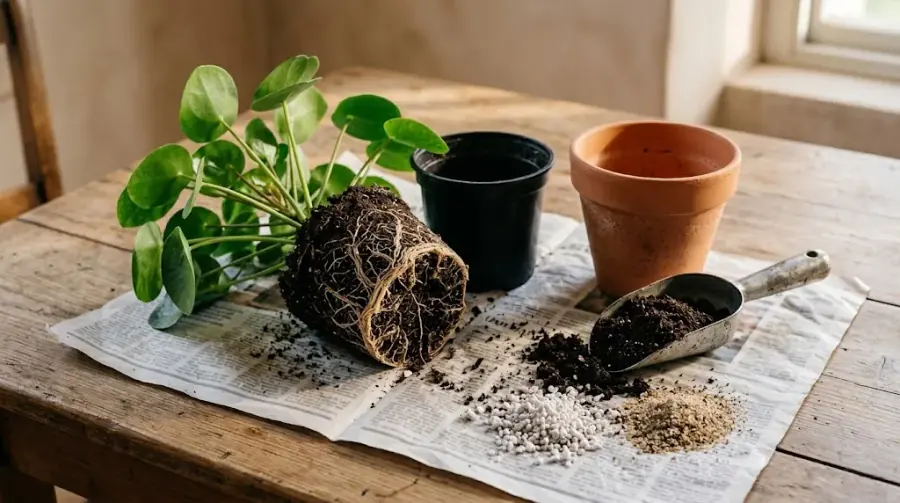
How to Repot an Indoor Plant — A Pakistani Guide
Repotting at the wrong time kills more plants than it saves. Learn when to repot, what soil to use, and the exact steps — adapted for Pakistani conditions.
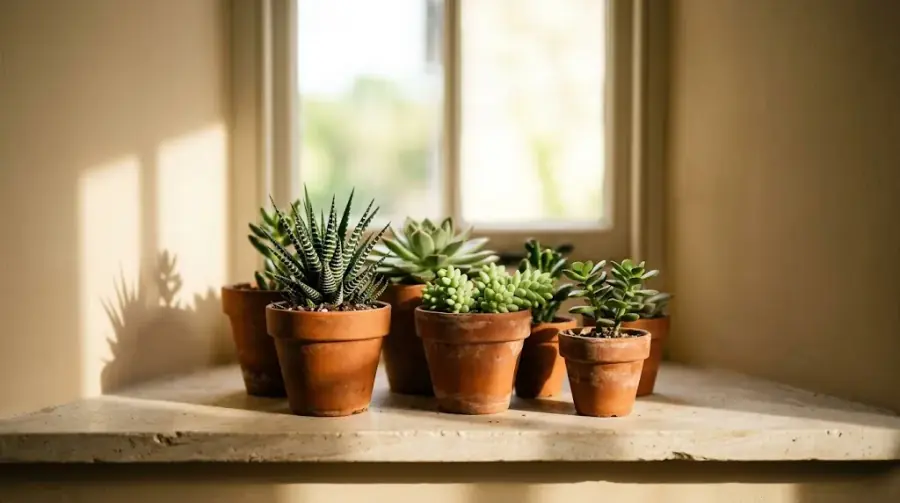
Summer Plant Care in Pakistan — Surviving 45°C
Islamabad and Rawalpindi summers cross 45°C, then turn humid overnight in monsoon. Here is how to keep your indoor plants alive through both.
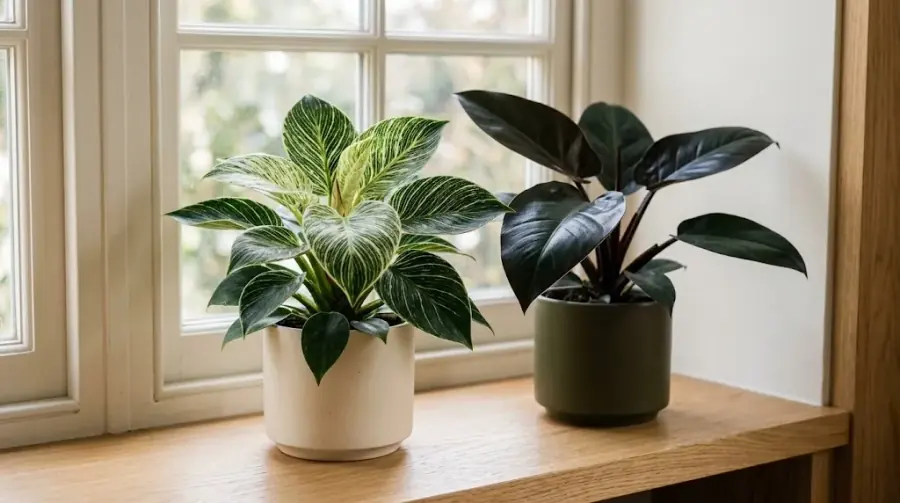
Philodendron Care in Pakistan — Birkin, Black Cardinal & Beyond
Philodendrons are the easiest way into rare foliage collecting. Here is how to keep Birkin, Black Cardinal and other varieties thriving in Pakistani homes.