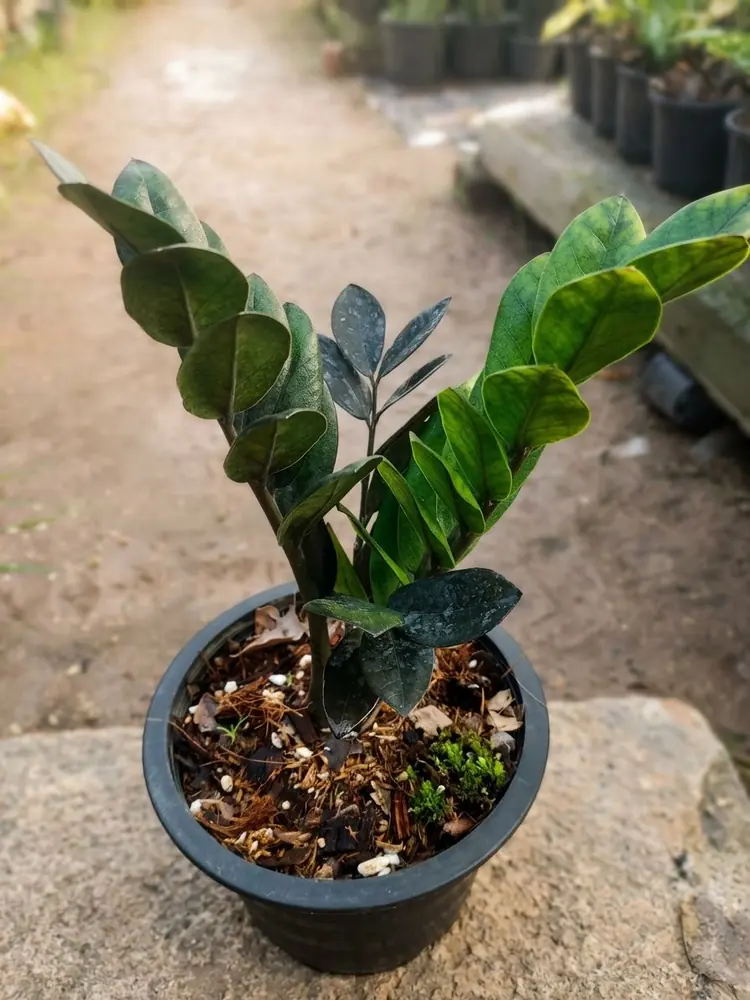
ZZ Plant
Wide, dark-green, glossy leaves on upright stems — the ZZ Plant is the one that makes a room look designed rather than decorated. It stores water in thick underground rhizomes, so it forgives a missed watering and keeps its shine in the low-light corners where most plants sulk. Ours stand 12–16 inches and are acclimatised to Twin Cities conditions before they leave us. Water every 3–4 weeks, keep it out of harsh afternoon sun, and it will quietly outlast almost every other plant you own.
Watering
Every 3-4 weeks
Difficulty
Beginner (Unkillable)
Sunlight
Low to bright indirect light
Botanical Name
Zamioculcas zamiifolia
Pet-Friendly
No (Toxic to cats and dogs)
Pot Size
Approx 8 Inches
Hand-Delivered Safely
Specially packaged for transit, anywhere in Pakistan. If it arrives unhealthy, we replace it.
Why the ZZ Plant works in Pakistani homes
Zamioculcas zamiifolia evolved in the dry grasslands of East Africa, which is exactly why it handles a Rawalpindi or Islamabad apartment so well. Underneath the soil it grows fat potato-like rhizomes that bank water for months. That single adaptation is the reason it survives a two-week trip away, a dim north-facing room, and the dry indoor air that runs through the Twin Cities from November to February.
The leaves are the other half of the appeal. Each stem arches upward carrying paired, waxy leaflets in a green so dark it reads almost black in low light. It is a plant that photographs well and looks expensive next to a sofa, a reception desk, or a bedroom window.
Light
Low to bright indirect light. The ZZ Plant is genuinely one of the few plants that will hold its form in a room lit only by a north window or an office tube light. It grows faster in bright indirect light near an east-facing window — but keep it out of direct afternoon sun from April through September, when Islamabad regularly crosses 38°C and glass will scorch the leaflets.
Water
Every 3–4 weeks, and less in winter. This is the part people get wrong. Those water-storing rhizomes rot long before the plant ever complains of thirst, so a yellowing ZZ Plant is almost always an overwatered one, not a dry one. Push a finger two inches into the soil — if you feel any moisture at all, wait another week. During the July–August monsoon, when humidity sits high and soil dries slowly, stretch the gap further still.
Soil and potting
It needs a gritty, fast-draining mix and a pot with a drainage hole — ordinary garden soil holds far too much water. Our succulent soil mix guide covers the perlite-and-compost ratio we use, and the repotting guide walks through moving it up a pot size, which it will need roughly every two years.
Size and what ships
Plants ship at approximately 12–16 inches tall in a clean nursery pot. Decorative pots are sold separately. Each plant is hand-checked and hand-delivered across Islamabad and Rawalpindi, and couriered carefully packed everywhere else, so it arrives with its soil and stems intact.
Good to know
Every part of the ZZ Plant contains calcium oxalate crystals, which irritate the mouth and stomach if chewed. Keep it out of reach of cats, dogs and small children — if you need a trailing plant that is genuinely pet-safe, the String of Hearts is the one to look at instead.
For seasonal adjustments, the full ZZ Plant care guide goes deeper on feeding, propagation from a single leaflet, and what to do when a stem starts to lean.
Care Guides for ZZ Plant
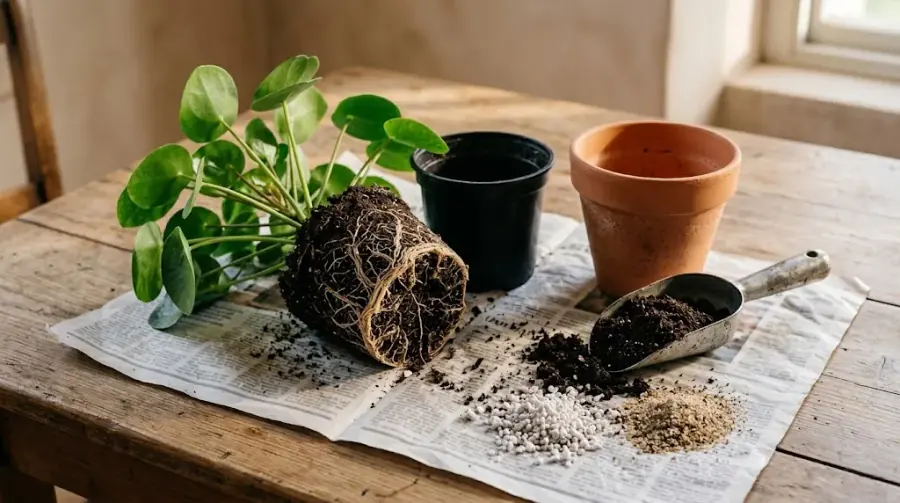
How to Repot an Indoor Plant — A Pakistani Guide
Repotting at the wrong time kills more plants than it saves. Learn when to repot, what soil to use, and the exact steps — adapted for Pakistani conditions.
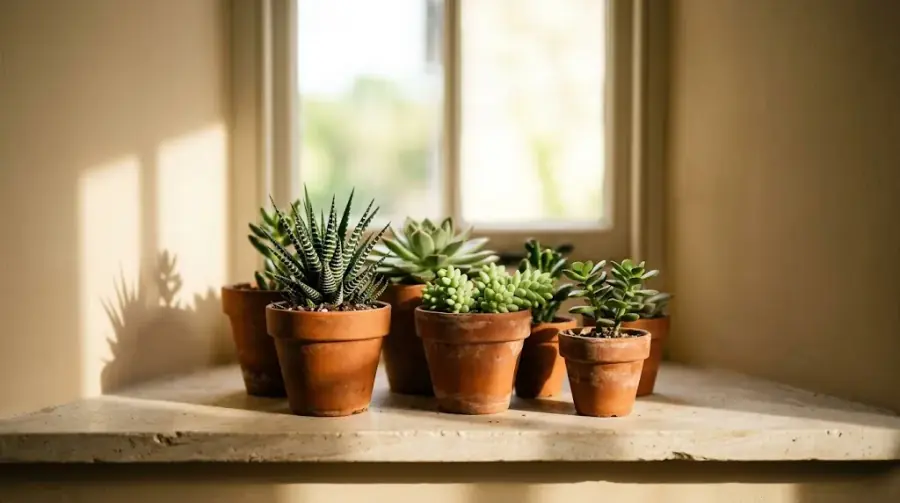
Summer Plant Care in Pakistan — Surviving 45°C
Islamabad and Rawalpindi summers cross 45°C, then turn humid overnight in monsoon. Here is how to keep your indoor plants alive through both.
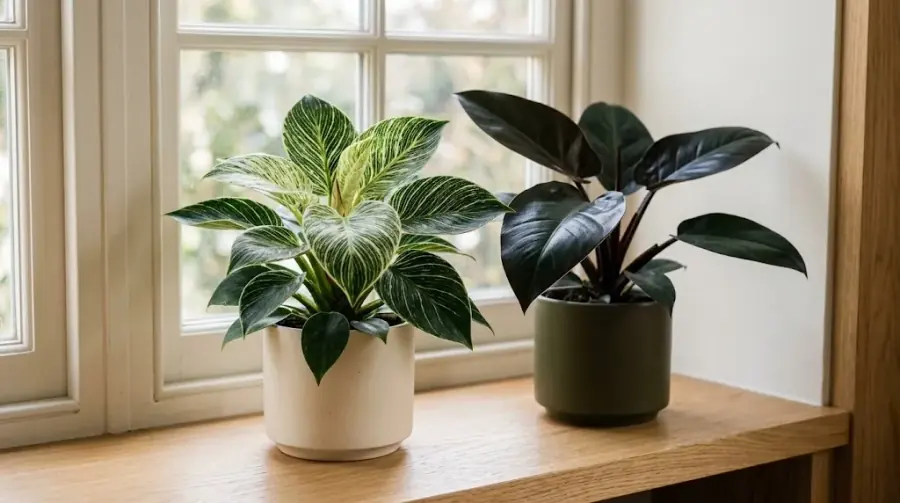
Philodendron Care in Pakistan — Birkin, Black Cardinal & Beyond
Philodendrons are the easiest way into rare foliage collecting. Here is how to keep Birkin, Black Cardinal and other varieties thriving in Pakistani homes.