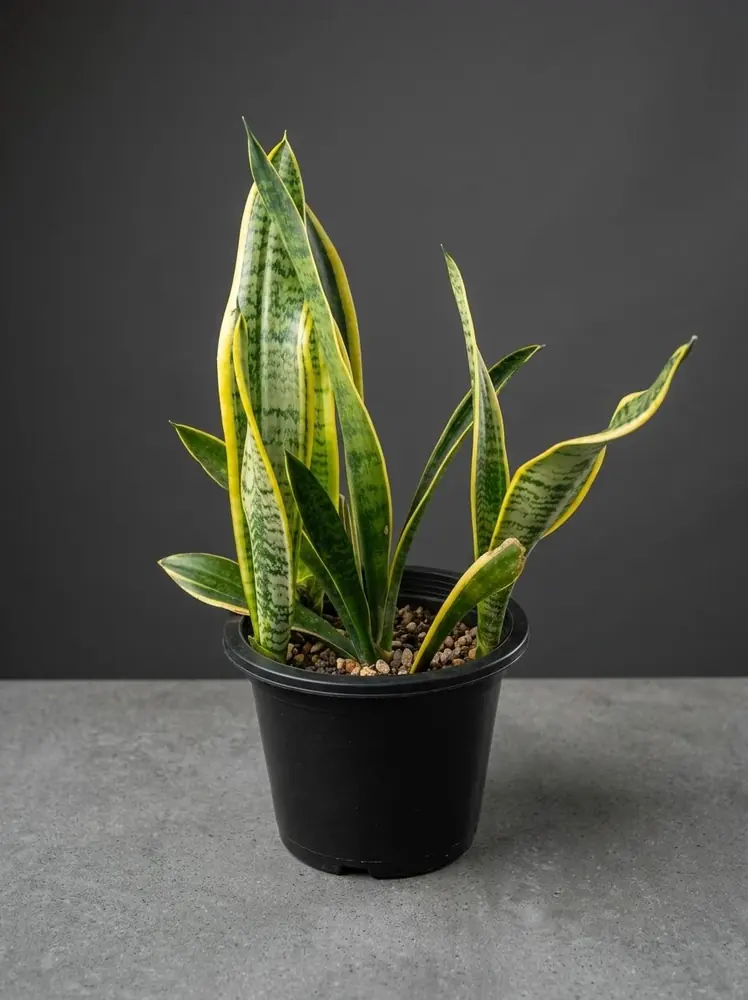
Snake Plant (Laurentii)
Stiff, upright, sword-shaped leaves banded in grey-green and edged in a clean yellow stripe. The Snake Plant is the one that survives the office nobody waters and the bedroom corner that gets no sun — low light is fine, and it wants water only every three to four weeks. If you have killed everything else, start here. Not pet-safe: keep it away from cats and dogs.
Sunlight
Low to bright indirect light
Watering
Every 3-4 weeks (let dry completely)
Botanical Name
Sansevieria trifasciata
Pet-Friendly
No
Size
Approx 12-16 Inches tall
Pot Size
Approx 5 Inches
Hand-Delivered Safely
Specially packaged for transit, anywhere in Pakistan. If it arrives unhealthy, we replace it.
The plant that survives being ignored
Sansevieria trifasciata 'Laurentii' grows as a cluster of stiff, upright, sword-shaped leaves — grey-green with darker banding across them and a bright yellow margin running the full length of each blade. It is architectural in a way few houseplants are, holding a vertical line that suits a narrow corner, a hallway, or the space beside a desk.
It is also close to indestructible. It stores water in its leaves and rhizomes, and it evolved in West African drylands where nothing is reliable. Neglect is not a problem for this plant; attention usually is.
Light
Low to bright indirect light. It genuinely tolerates a dark bedroom corner or an office lit only by ceiling tubes, which is why it ends up in those places. It grows faster and keeps the yellow edging brighter nearer a window, but it will not collapse without one. The only thing to avoid is harsh direct summer sun through glass, which bleaches the leaves.
Water
Every three to four weeks, letting the soil dry out completely in between, and less again in winter — once every six weeks through January is not unreasonable. Every Snake Plant that dies, dies from watering. The leaves stay firm and upright when it is happy; the first sign of trouble is a leaf going soft and yellow at the base, and by then water has been sitting too long. Water the soil, not down into the crown.
Air and placement
It is one of the better-documented air-purifying houseplants and, unusually, continues releasing oxygen at night, which is the reason it is so often recommended for bedrooms. It is comfortable in ordinary room temperatures and does not need humidity.
Soil and potting
A gritty, free-draining mix in a pot with a drainage hole, and keep it snug — Snake Plants flower and grow best when slightly pot-bound, and a large pot of wet soil is exactly what causes rot. See the repotting guide for dividing a crowded clump, which is also how you propagate it.
Good to know
Sansevieria is toxic to cats and dogs if chewed, and the upright leaves are unfortunately attractive to cats. Place it where they cannot reach. For a genuinely pet-safe alternative that tolerates similar light, look at the Window Haworthia.
Our guide to the best indoor plants for Islamabad apartments covers where this one earns its place.
Care Guides for Snake Plant (Laurentii)
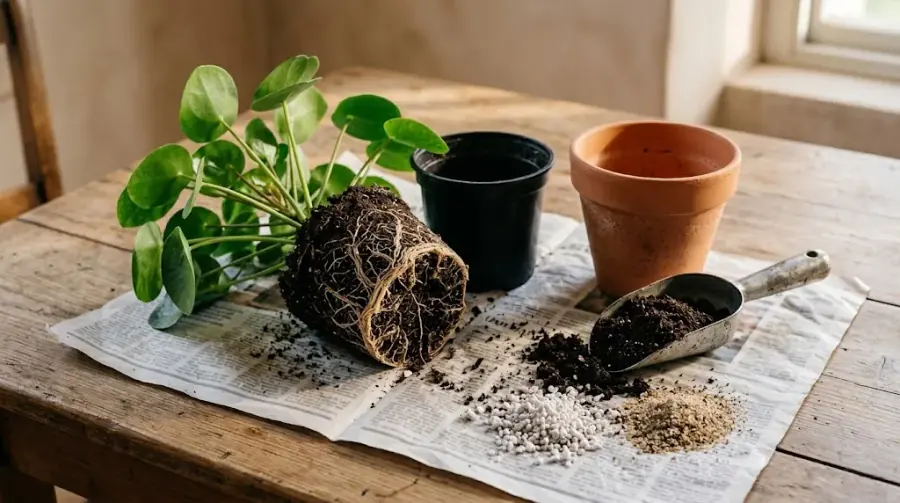
How to Repot an Indoor Plant — A Pakistani Guide
Repotting at the wrong time kills more plants than it saves. Learn when to repot, what soil to use, and the exact steps — adapted for Pakistani conditions.
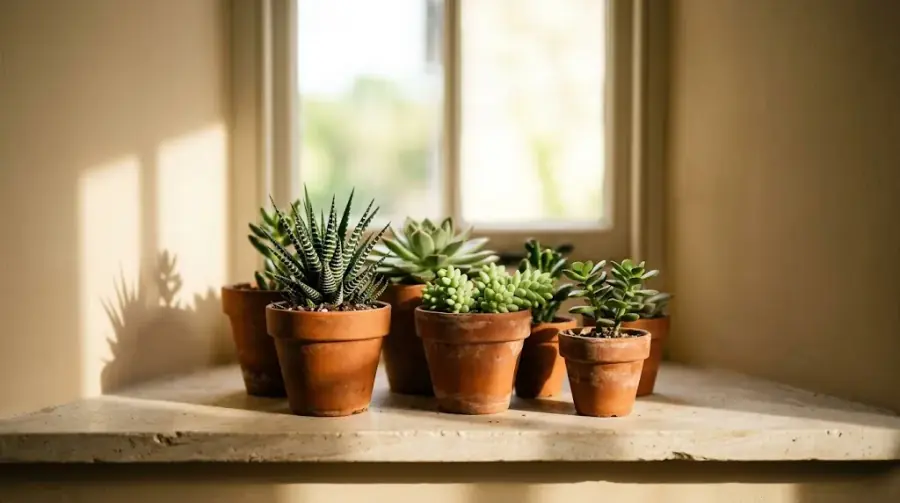
Summer Plant Care in Pakistan — Surviving 45°C
Islamabad and Rawalpindi summers cross 45°C, then turn humid overnight in monsoon. Here is how to keep your indoor plants alive through both.
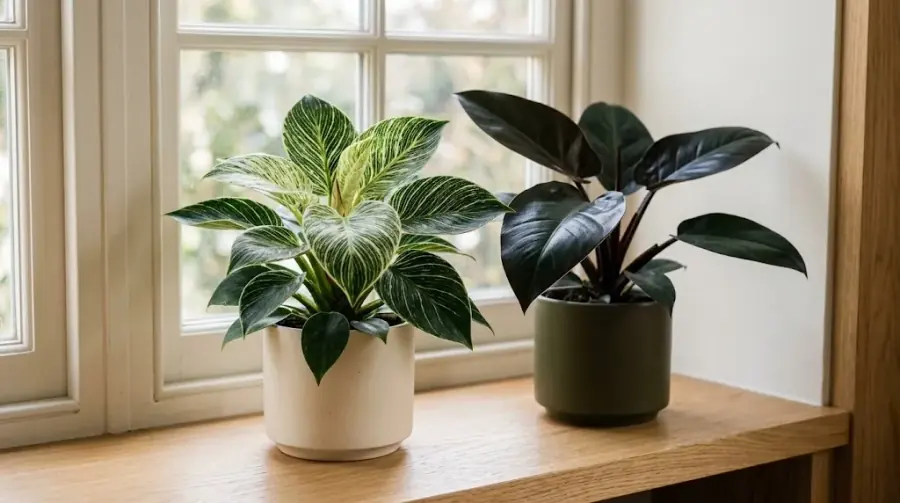
Philodendron Care in Pakistan — Birkin, Black Cardinal & Beyond
Philodendrons are the easiest way into rare foliage collecting. Here is how to keep Birkin, Black Cardinal and other varieties thriving in Pakistani homes.